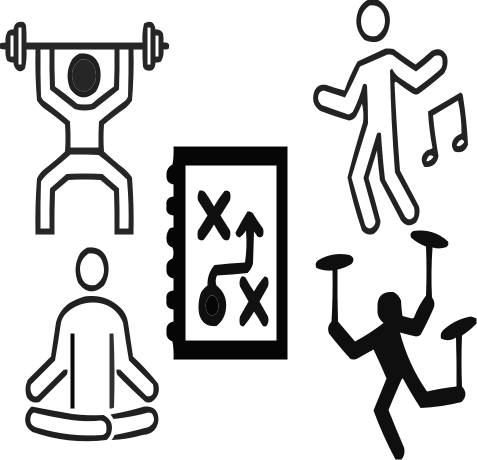
Black-and-white icons show a person lifting weights for fitness, a person dancing with music notes, a person meditating, a person juggling plates, and a playbook with strategy symbols in the centre.

Philosophy

A five-level pyramid diagram labelled Hierarchy of Needs, showing levels from bottom to top: basic physiological needs like fitness, safety needs, interpersonal needs, personal growth, and transcendence/self-actualisation.
Maslow's Hierarchy of Needs
Video:
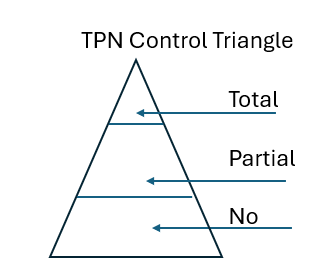
TPN Control Triangle
A triangle labelled TPN Control Triangle is divided into three horizontal sections from bottom to top: No, Partial, and Total fitness, each with an arrow pointing left.
Video:

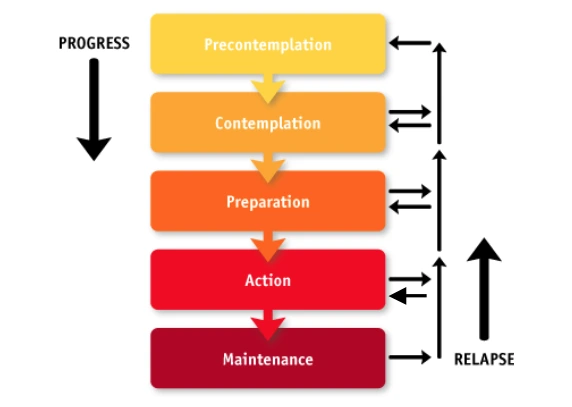
Stages of Change Model

(Prochaska and DiClemente, 1983)
A flowchart showing five stages of fitness change: Precontemplation, Contemplation, Preparation, Action, and Maintenance, with arrows indicating progress forward and potential relapse back to earlier stages.
Video:

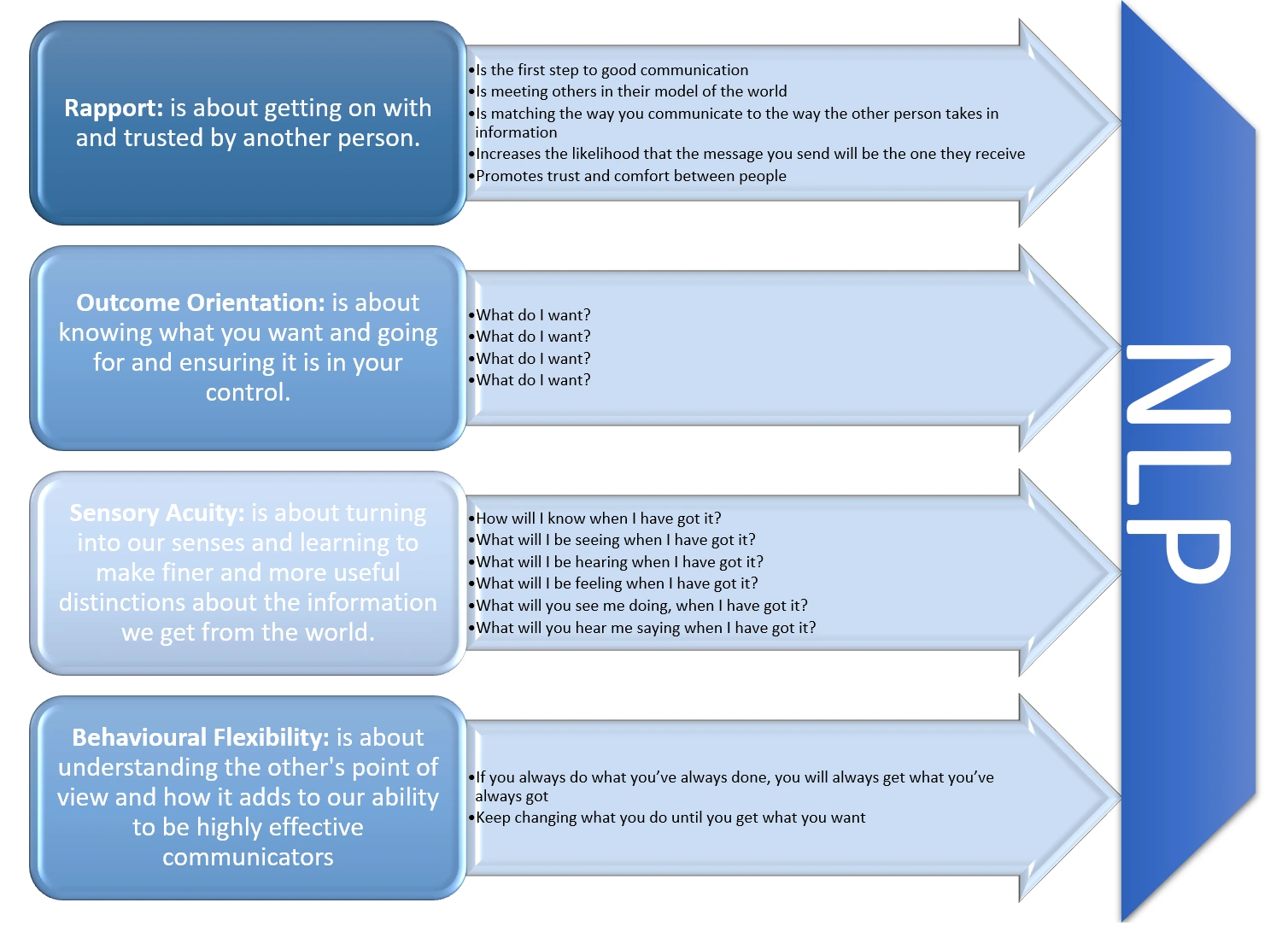
Neurolinguistic Programming (NLP)

A flowchart explaining four key NLP concepts—Rapport, Outcome Orientation, Sensory Acuity, and Behavioural Flexibility—shows how these skills can boost both communication and fitness goals, with each concept defined and guiding questions pointing to NLP.
NLP Pillars: Rapport, Sensory Awareness, Outcome Thinking, Behavioral Flexibility
Video:
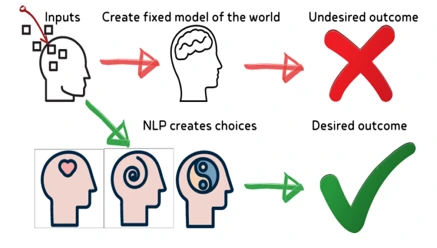
A diagram compares two approaches: a fixed model of the world leads to an undesired outcome (red X), whilst NLP creates choices and mental fitness, leading to a desired outcome (green tick) via three heads with symbols.
NLP helps transform undesired outcomes into desired outcomes by creating more choices and flexibility in thought.
Follow me on: Instagram | YouTube